

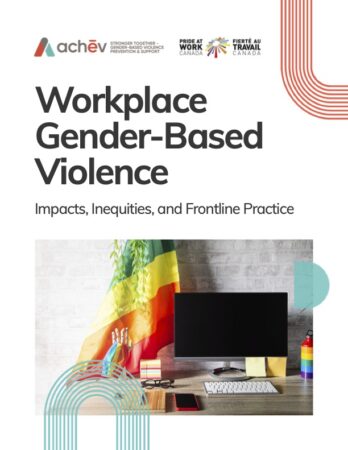
Workplace Gender-Based Violence
Gender‑based violence (GBV) in the workforce includes violent or harmful behaviours rooted in gender bias, misogyny, homophobia, and transphobia. It appears through policies, interactions, and workplace cultures that marginalize or exclude people based on gender or sexuality.
In this guide we will review the impacts of GBV in the workplace, why does GBV disproportionately affect 2SLGBTQIA+ people, and what frontline staff can do about it.
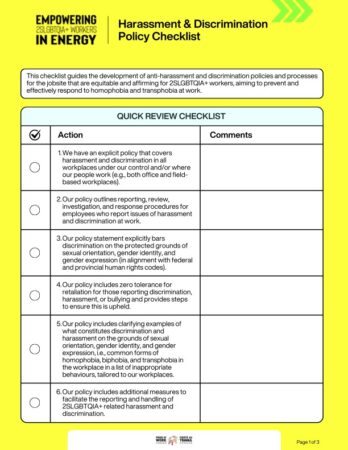
Inclusion Toolkit for Workplaces
The Inclusion Toolkit is a practical set of tools designed to help employers, site leaders, HR professionals, DEI practitioners, and employees strengthen safety, dignity, and inclusion for 2SLGBTQIA+ workers in the energy sector.
The toolkit offers clear, actionable resources that organizations can use to identify gaps, guide conversations, improve policies, and support implementation across worksites and teams.
Empowering 2SLGBTQIA+ Workers in Energy
Empowering 2SLGBTQIA+ Workers in Energy is a result of community-led research aiming to translate worker testimony into actionable steps to advance 2SLGBTQIA+ rights and inclusion that employers in the energy sector can implement on the frontline – not just in the corporate office. This research is part of a larger project funded by Women and Gender Equality Canada and will be accompanied by a practical toolkit that can be used in workplaces across the sector to cultivate safer and more inclusive environments for 2SLGBTQIA+ workers.
Advancing Equity for 2SLGBTQIA+ Workers in Canada with the Employment Equity Act
This policy brief, prepared by Pride at Work Canada and the Enchanté Network, calls for long-overdue updates to Canada’s Employment Equity Act. Despite over 50 years of advocacy, 2SLGBTQIA+ workers remain excluded from the Act’s protections, leaving them underrepresented in data and equity initiatives, and facing persistent barriers such as wage gaps, precarious work, and higher unemployment.
The brief highlights the costs of this exclusion for both workers and employers, and provides clear recommendations to ensure 2SLGBTQIA+ people are recognized as a designated group. It also calls for stronger intersectional data, secure workforce reporting, and meaningful transparency.
Progress on blood donations for 2SLGBTQIA+ communities
Today, CBS is working to rebuild trust with 2SLGBTQIA+ communities and employees by listening, engaging meaningfully, and transforming its internal culture. This work shows how organizations can take concrete, authentic steps to repair relationships and center inclusion in their mission.
Emergency Messaging Guide
This resource equips our Proud Partner network with clear, proactive strategies to navigate current challenges and counter the rising anti-gender movement. Grounded in human rights law, it provides tools to combat misinformation, protect queer and trans employees, and foster safe, inclusive workplaces where everyone can thrive without fear.
Lead with Pride: Best Practices for Advancing 2SLGBTQIA+ Leadership
This resource features an analysis of the career pathways and experiences of queer and trans leaders, as well as the workplace practices of private, public, and non-profit sector employers, to establish an understanding of the barriers, supports, and opportunities for queer and trans professionals to reach leadership positions in Canada.
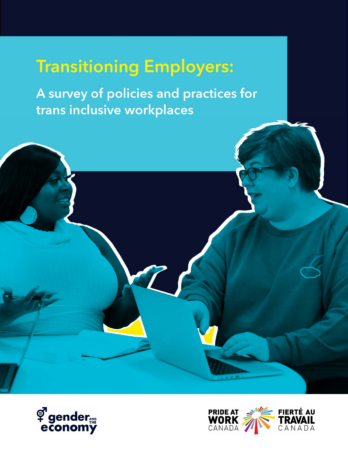
Transitioning Employers: A survey of policies and practices for trans inclusive workplaces
The Transitioning Employer report shows how organizations can invest in building a future where all people, including all trans and gender non-conforming individuals, have safe and affirming workplaces. The report is available in English and French.
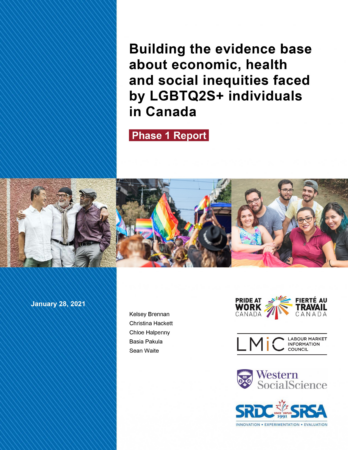
Building the evidence base about economic, health and social inequities faced by LGBTQ2S-Plus individuals in Canada
The reports present findings from the project Building the evidence base about economic, health, and social inequities faced by LGBTQ2S+ individuals in Canada. The study has found persistent earnings gaps and other inequities experienced by lesbian, gay, and bisexual individuals (LGB) in comparison with heterosexual men; outcomes for bisexual-identified people were consistently the poorest. Ongoing data gaps in Canada limit our understanding of the full LGBTQ2S+ community.
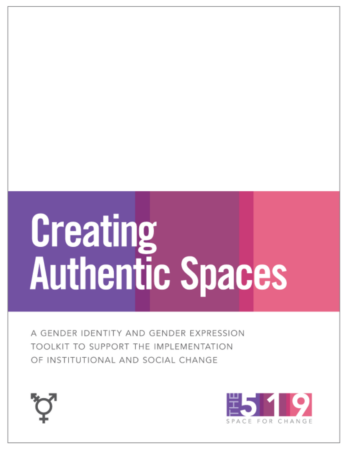
Creating Authentic Spaces: A Gender Identity and Gender Expression Toolkit
The Creating Authentic Spaces toolkit is part of community efforts to challenge transphobia and to foster environments that are inclusive of gender identity and gender expression. People who identify as trans often experience barriers to accessing necessary services due to discrimination or harassment based on their gender identity and gender expression. The toolkit is available in English and French.
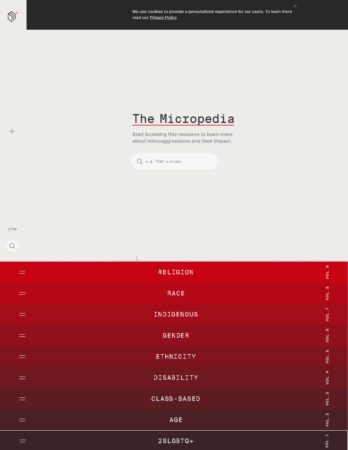
The Micropedia of Microaggressions
The Micropedia of Microaggressions is a comprehensive tool to learn about microaggressions through definitions, information and real-world examples from culture, media, and daily interactions. Each entry explains why the microaggression is harmful in an easy-to-understand, judgement-free way.